Peptides 101: a research-context primer
Tide Front Supply Research Team · May 7, 2026 · 1 min read
What peptides are, why purity matters, and how to read a certificate of analysis before you order anything.
Peptides are short chains of amino acids — typically fewer than 50 residues — that act as signalling molecules in nearly every biological system. In a research context, they're powerful tools precisely because they're targeted: each sequence binds a specific receptor or enzyme.
Why purity matters
A 95%-pure peptide isn't usable for sensitive in-vitro work. The 5% impurity could be truncated sequences, oxidized analogs, or residual TFA — any of which can confound a binding assay or alter dose-response curves. We publish HPLC and mass-spec data with each batch so you can verify exactly what you're working with.
Reading a CoA
Every certificate of analysis answers four questions:
- Identity: does the peptide match the claimed sequence? Mass-spec confirms molecular weight.
- Purity: what fraction of the sample is the target compound? HPLC at 220nm is the standard.
- Counterion: is it a TFA, acetate, or HCl salt? This affects net peptide content per milligram.
- Endotoxin: for cell-culture work, LAL testing matters.
If a vendor can't show you these, walk away.
Repair & Recovery
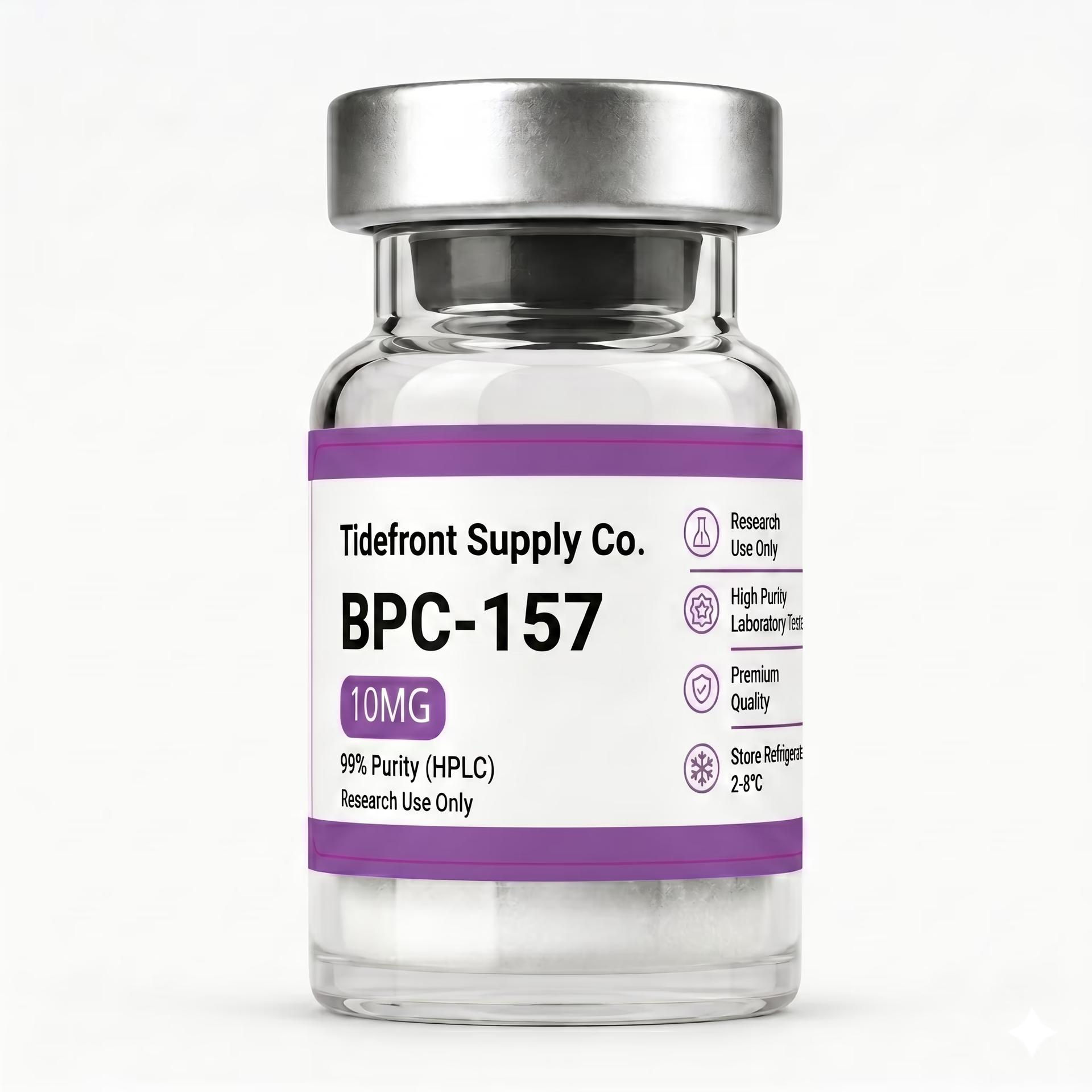
BPC-157
BPC-157 (CAS 137525-51-0) is a synthetic pentadecapeptide drawn from a gastric protein sequence, stocked at 10 mg, 20 mg and 200 mg. Animal data only.
Storage and handling
Lyophilized peptides are stable at -20°C for months to years; reconstituted aliquots should be used within weeks. Never refreeze a single aliquot more than once.