Proper storage and handling of research peptides
Tide Front Supply Research Team · Apr 21, 2026 · 1 min read
A practical guide to lyophilization, reconstitution, aliquoting, and freeze-thaw cycles.
Peptide degradation is the most common reason research data fail to reproduce. The good news: with a few habits, you can keep most peptides usable for the duration of a study.
Lyophilized storage
Vials should be stored at -20°C, ideally with desiccant. -80°C is overkill for most sequences but doesn't hurt. Avoid temperature cycling; a chest freezer is better than a frost-free unit.
Reconstitution
Use sterile bacteriostatic water (0.9% benzyl alcohol). Calculate your concentration carefully — most assays want a working stock at 1 mg/mL and aliquots at 100 μL to 500 μL.
Aliquoting
Aliquot immediately on reconstitution. Each aliquot should be sized for a single experiment; never refreeze.
Freeze-thaw
A peptide solution can typically tolerate one freeze-thaw cycle without measurable loss; three or more cycles will reduce activity for many sequences.
Cognitive Support
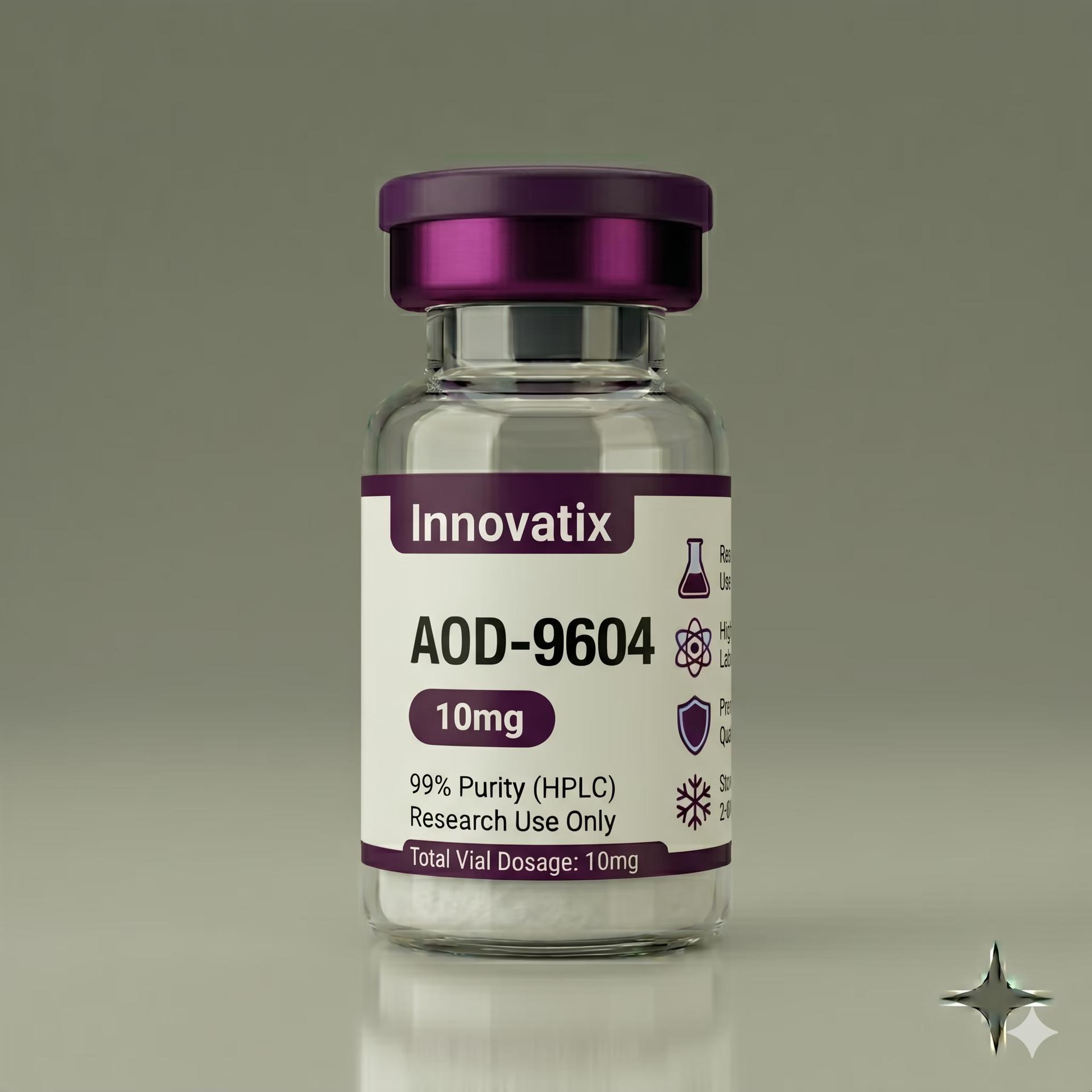
AOD-9604
AOD-9604 (CAS 221231-10-3) is a synthetic analogue of the C-terminal region of human growth hormone, stocked in 2 mg, 5 mg and 10 mg lyophilised vials.
Documentation
Label every aliquot with peptide name, batch number, concentration, solvent, and date. Future-you will thank present-you.