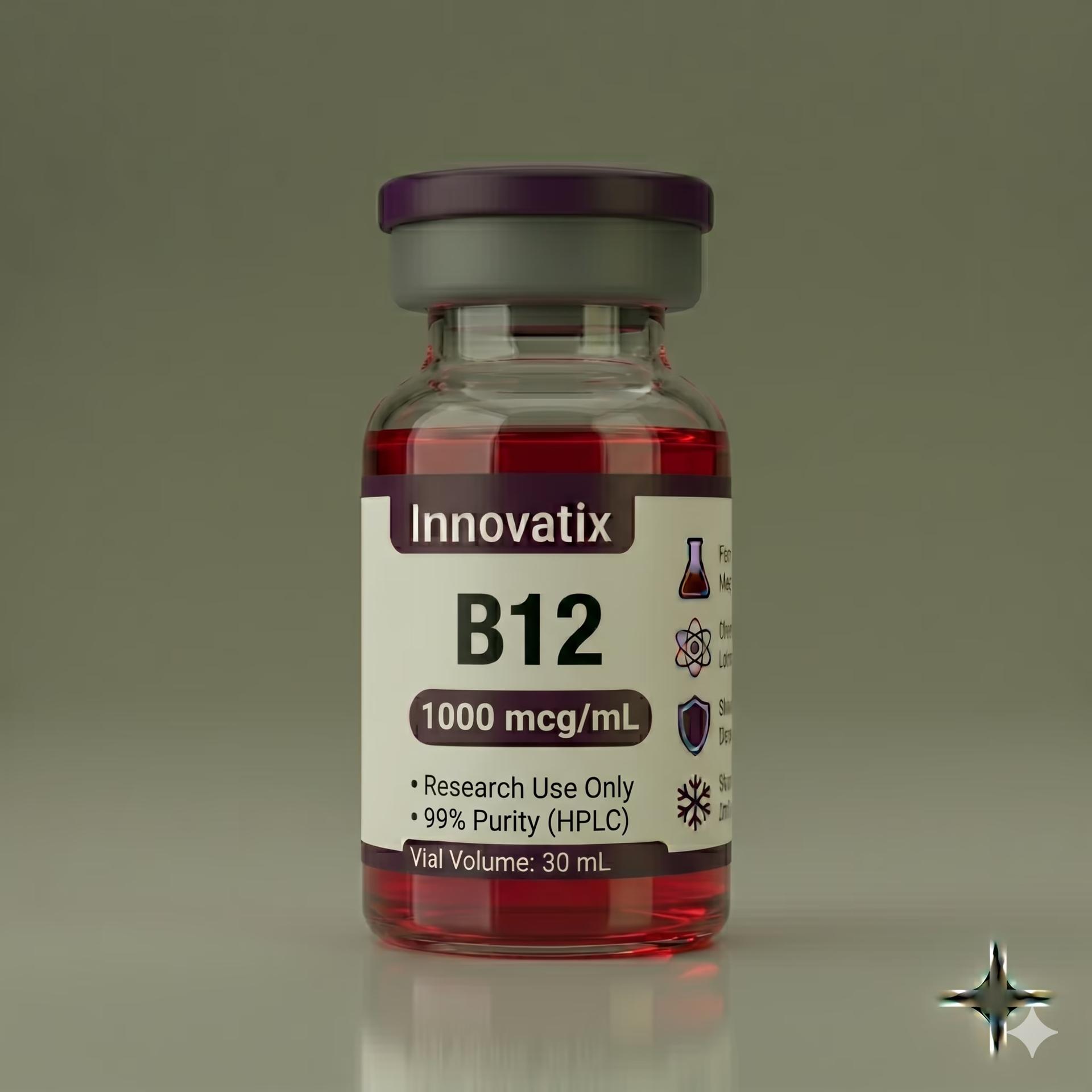
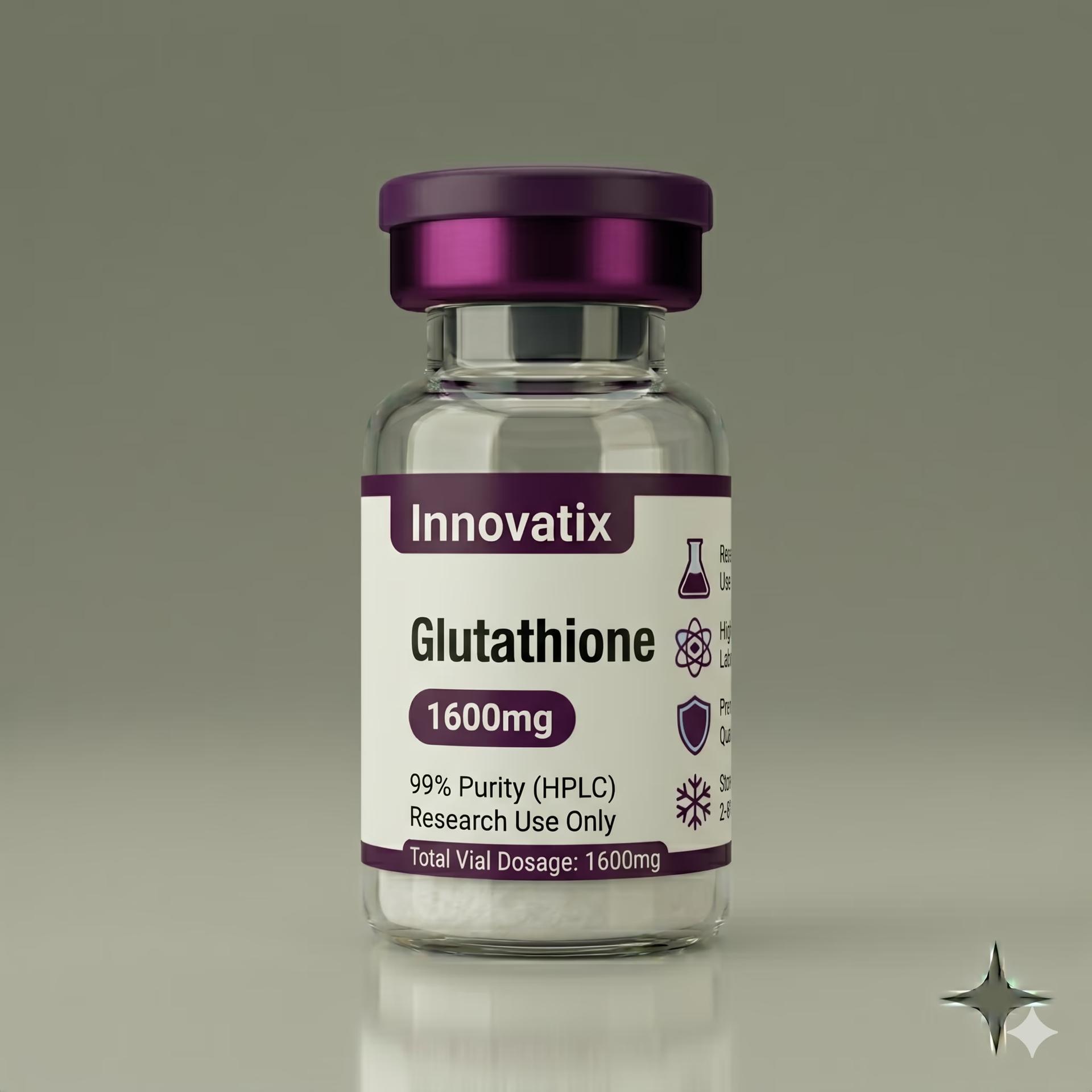
"Lipotropic" is an older term, predating modern biochemistry, for a compound studied for its role in preventing or reducing fat accumulation in the liver — generally by supporting phospholipid synthesis or fat-metabolism pathways. The two compounds in this category represent two different corners of that research.
A methyl-donor and cofactor blend
The B12 formulation in this catalog is a compound blend combining lipotropic factors — the methyl-donor compounds classically used in this category, such as methionine, inositol, and choline — with vitamin B12 (methylcobalamin/cyanocobalamin) in a single injectable preparation. B12 itself is an essential cofactor for methionine synthase, part of the same one-carbon-metabolism pathway that the blend's methyl-donor components participate in; it's included specifically because that pathway connection, not a claim that B12's only physiological role is fat metabolism.
The individual methyl donors
The lipotropic factors in the B12 blend each have an independently studied role. Methionine is a sulfur-containing essential amino acid and the primary methyl-group donor once converted to S-adenosylmethionine (SAM) — the same cofactor NNMT consumes in the mechanism 5-Amino-1MQ targets in the Longevity & Vitality category. Inositol is a sugar alcohol studied as a precursor to phosphatidylinositol, a phospholipid involved in cell-membrane signaling and lipid transport. Choline is likewise a phospholipid precursor, required for synthesizing phosphatidylcholine, which the liver uses to package and export fat as part of VLDL particles — the step lipotropic research specifically targets as the point where fat either accumulates in the liver or is exported from it.
An unrelated antioxidant mechanism
Glutathione doesn't participate in methylation or fat-metabolism signaling at all — it's studied for a different function entirely: redox buffering. As a tripeptide built from glutamate, cysteine, and glycine, its reduced (GSH) form is the cell's primary defense against oxidative stress and a required cofactor for the phase II detoxification enzymes (glutathione S-transferases). It's grouped in this category by research application — metabolic and cellular-health research — rather than a shared biochemical pathway with the B12 blend.
Because the B12 formulation is a blend rather than a single molecule, its certificate of analysis documents the combined preparation rather than an isolated compound — worth accounting for when comparing purity data against a single-molecule product elsewhere in the catalog.
| Compound | Class | Primary pathway |
|---|---|---|
| B12 (lipotropic + B12 blend) | Compound blend | One-carbon metabolism (methionine synthase); hepatic lipid handling |
| Glutathione | Tripeptide antioxidant | Cellular redox buffering; phase II detoxification |