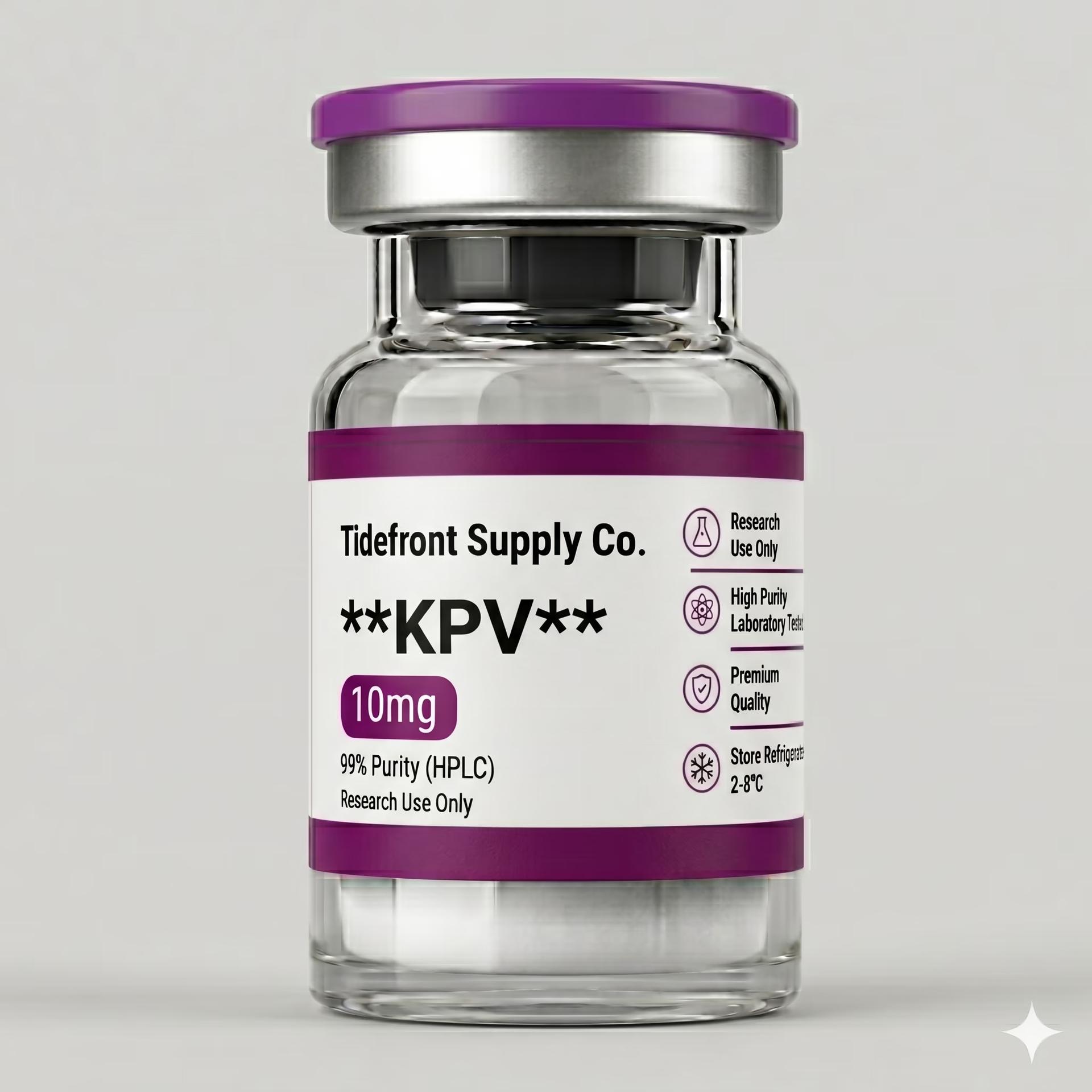
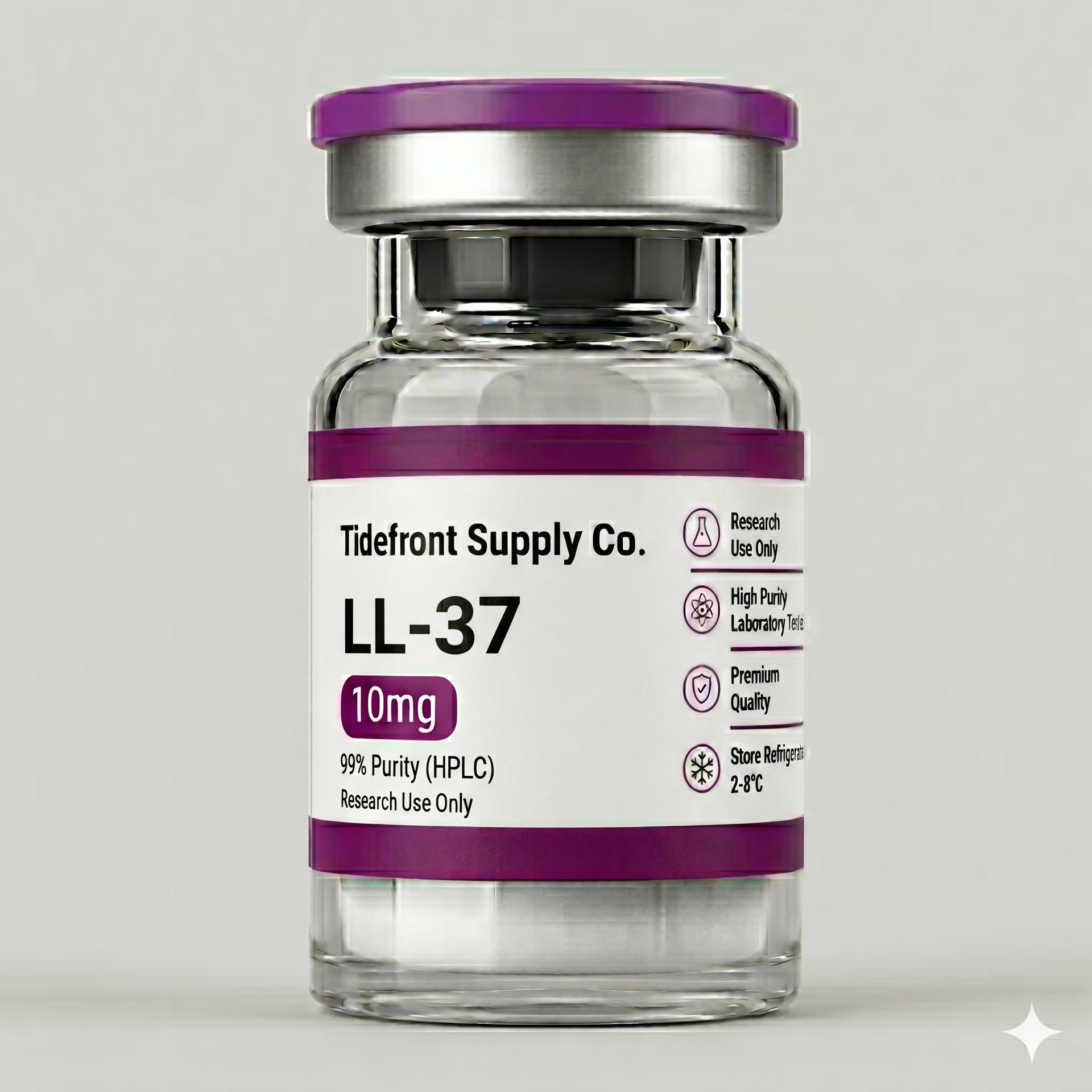
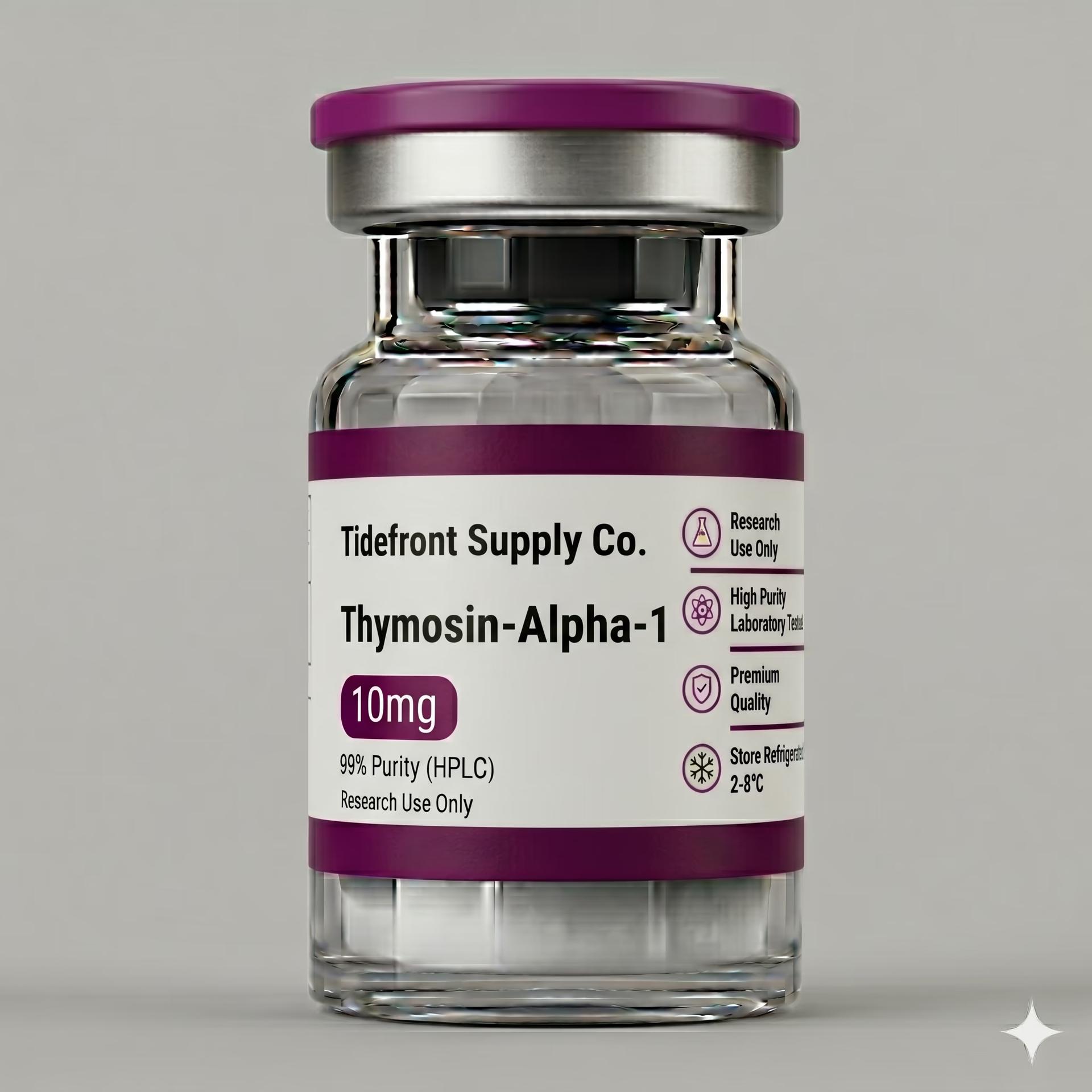
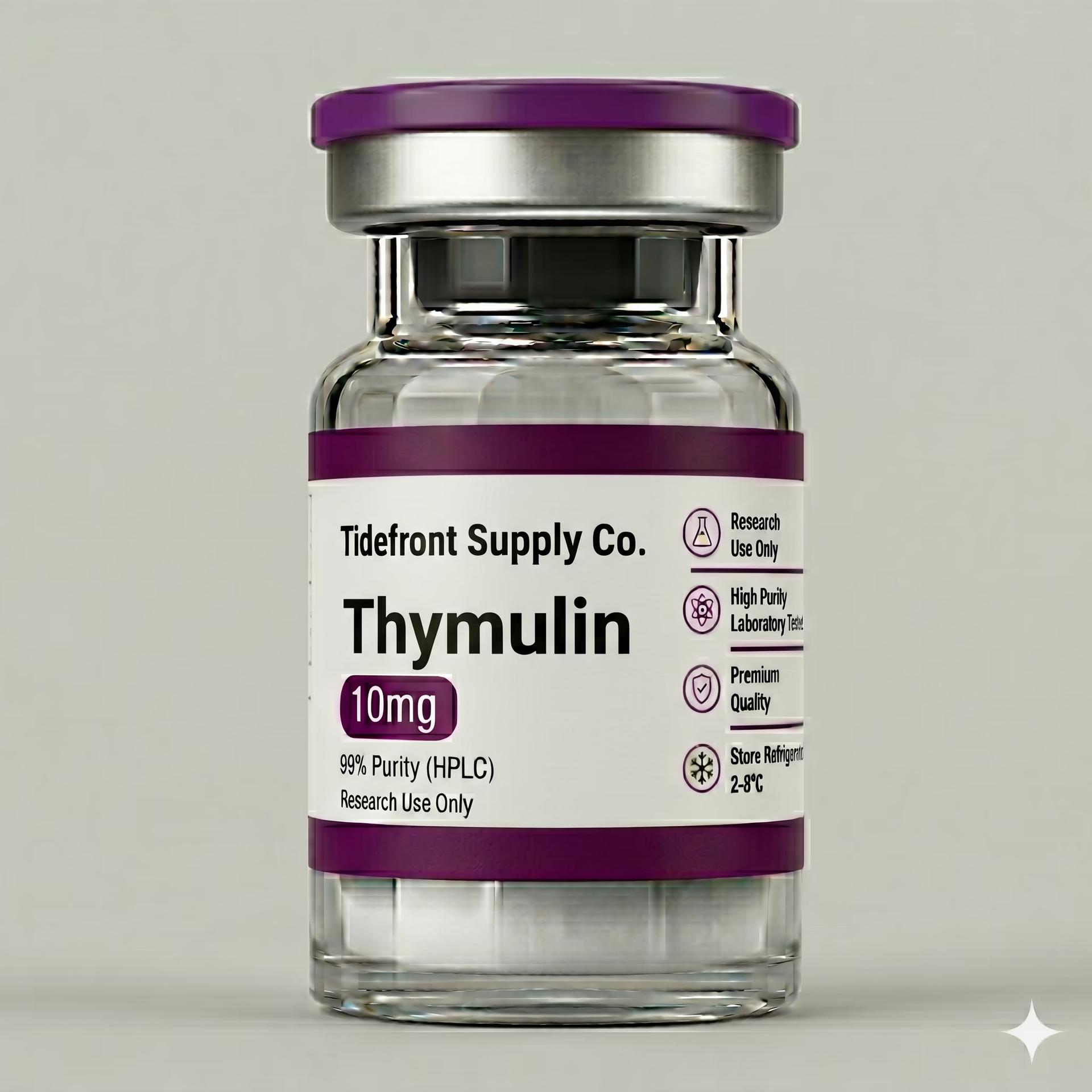
"Thymic" describes where two of these four peptides come from; the other two are grouped here by research application rather than origin.
Thymic-hormone-derived peptides
Thymosin Alpha-1 is a 28-amino-acid peptide derived from the thymic hormone prothymosin alpha, studied for modulating T-cell maturation and innate immune signaling, including toll-like receptor pathways. Thymulin is a nonapeptide produced by thymic epithelial cells with a distinguishing requirement: it needs zinc as a cofactor for bioactivity. Zinc-deficient thymulin (sometimes distinguished in the literature as the "non-zinc" form) shows reduced or absent activity in T-lymphocyte differentiation assays, a standard consideration in experimental design with this peptide.
Antimicrobial and anti-inflammatory peptides
LL-37 is the only human cathelicidin — a 37-amino-acid antimicrobial peptide with a dual mechanism: direct disruption of microbial cell membranes, plus a separate immunomodulatory role in chemotaxis and wound-healing signaling. KPV is a tripeptide (sequence Lys-Pro-Val) that is a C-terminal fragment of alpha-MSH, the same parent hormone the Melanotan-class peptides are modeled on. Structurally, that makes KPV related to the Melanocortin Agonists category — but mechanistically it's studied separately, because KPV's anti-inflammatory activity, via NF-κB pathway modulation, appears independent of the melanocortin-receptor pigmentation signaling that Melanotan and PT-141 engage. Neither LL-37 nor KPV shares a target with the thymic-hormone peptides above; they're grouped here by shared research domain (immune modulation) rather than a common receptor.
| Peptide | Class | Primary pathway |
|---|---|---|
| Thymosin Alpha-1 | Thymic-hormone-derived | T-cell maturation, TLR signaling |
| Thymulin | Zinc-dependent nonapeptide | T-lymphocyte differentiation |
| LL-37 | Human cathelicidin | Antimicrobial membrane disruption; immune chemotaxis |
| KPV | Alpha-MSH tripeptide fragment | NF-κB-mediated anti-inflammatory signaling |
Handling and storage
All four peptides in this category are supplied lyophilized and share the same general reconstitution practice as the rest of the catalog: sterile bacteriostatic water, gentle mixing rather than shaking, and refrigerated storage once in solution. Thymulin is the one compound here where storage detail matters beyond the usual guidance — because its bioactivity depends on zinc coordination, researchers working with it should confirm the zinc content of their reconstitution buffer rather than assuming a standard diluent is sufficient.
None of the four peptides above have progressed through large-scale human clinical trials for the mechanisms described here. The supporting literature is predominantly cell-culture and animal-model research, which is the evidence tier this catalog's editorial policy assigns to work at this stage rather than a finding established in humans.